|
The Early Years Through 1979
The founding of FIU began with Senator Ernest "Cap"
Graham (the father of former Florida governor and current
U.S. Senator Bob Graham), who presented the initial
proposal to the Florida legislature in 1943 to establish
a state university in South Florida. Graham was ahead
of his time, recognizing that Miami needed a state university
to serve its growing population. While his bill did
not pass, the Senator Graham persisted in presenting
his proposal to his colleagues, warning them that Miami
needed a state university.
In
1965, Florida Senator Robert M. Haverfield introduced
Senate Bill 711, which instructed the state Board of
Education and the Board of Regents (BOR) to begin planning
for the development of a state university in Miami.
The governor signed the bill into law in June 1965,
and FIU was on its way to becoming a reality.
FIU's founding president Charles "Chuck"
Perry, who passed away in 1999, was appointed by the
Board of Regents in July 1969 after a nationwide search.
Just 31 years old, the new president was the youngest
in the history of the State University System and, at
the time, the youngest university president in the country.
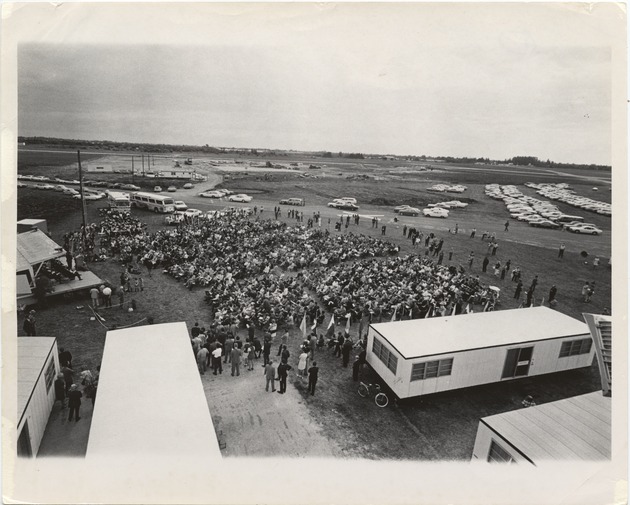
Perry recruited the three co-founders - Butler Waugh,
Donald McDowell and Nick Sileo - who came to abandoned
Tamiami Airport in the summer of 1969 and launched the
monumental task of creating a new university. Alvah
Chapman, former Miami Herald publisher and Knight Ridder
chairman, used his civic standing and media power to
assist the effort. In the 1980s, Chapman would become
chair of the FIU Foundation Board of Trustees.
In September 1972, 5,667 students finally entered the
new state university. Miami had been the largest city
in the country lacking a public baccalaureate-granting
institution, and now it finally had a university that
offered both accessibility and affordability. Eighty
percent of the student body had just graduated from
Miami-Dade Community College. A typical student entering
FIU was 25 years old and attending school full-time
while holding down a full-time job. Forty-three percent
were married. FIU was far from your typical university.
The first commencement, held in June 1973, was held
in the reading room of the ground floor of Primera Casa
(today called the Perry Building) - the only place large
enough on campus for the ceremony. More than 1,500 family
members and friends watched FIU's first class of 191
graduates receive their diplomas.
By late 1975, after seven years at the helm, Chuck
Perry felt he had accomplished his goal and left the
University to become president and publisher of Family
Weekly, one of the country's largest magazines. When
he left, there were over 10,000 students attending classes
and a campus with five major buildings and a sixth being
planned.
Harold Crosby, the University's second president and
the founding president of the University of West Florida
in Pensacola, agreed in 1976 to serve a three-year "interim"
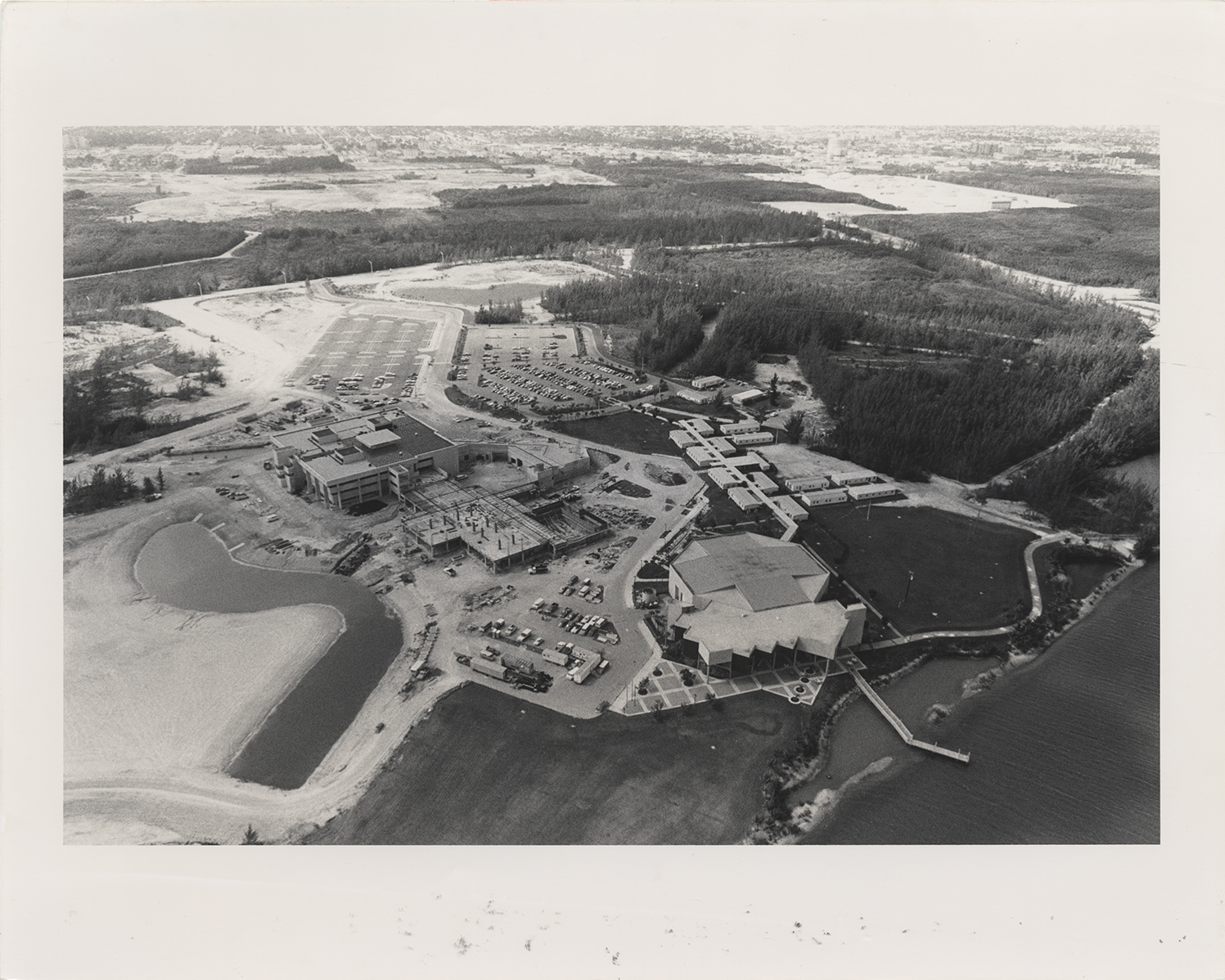
term. Under his leadership, the North Campus (which
will be officially renamed the Biscayne Bay Campus in
February) - located on the former Interama site on Biscayne
Bay - was opened in 1977. State Senator Jack Gordon
was instrumental in securing funding for the development
of the campus. President Crosby was also insistent that
the "I" in FIU be highlighted, which prompted
the launching of new programs with an international
focus and the recruitment of faculty from the Caribbean
and Latin America. President Crosby's resignation in
January 1979, triggered the search for a "permanent"
president.
|